

Do otr wheels require balancing?
Aug 13, 2025
Leave a message
Hey there! As a supplier of OTR (Off-The-Road) wheels, I often get asked a really important question: "Do OTR wheels require balancing?" Well, let's dig into this topic and find out.
First off, what are OTR wheels? These are the big, tough wheels you see on heavy - duty vehicles like loaders, grain transport machines, and port machinery. They're built to handle some seriously rough conditions and heavy loads. For example, our 20 - 19.5/2.5tl Grain Transport Machine Wheels are designed to carry large amounts of grain over long distances, and the 25 - 14.00 Loader Wheel is made to withstand the constant pushing and lifting in construction sites.
Now, back to the question of balancing. In theory, just like regular car wheels, OTR wheels can benefit from balancing. Balancing means making sure that the weight is evenly distributed around the wheel and tire assembly. When a wheel is unbalanced, it can cause a bunch of problems.
One of the main issues with unbalanced OTR wheels is uneven tire wear. If the weight isn't evenly spread, certain parts of the tire will bear more stress than others. This leads to some areas wearing out faster than the rest. For instance, if you've got a loader with unbalanced wheels, the tires might start to show excessive wear on one side. This not only shortens the lifespan of the tires but also affects the performance of the whole vehicle. You'll end up having to replace the tires more often, which can be a real pain in the pocket.
Another problem is vibration. Unbalanced wheels can cause the vehicle to vibrate. This vibration isn't just annoying; it can also damage other components of the vehicle. In a port machinery with 25 - 11.25/2.0 PORT MACHINERY WHEEL, for example, the constant vibration can loosen bolts, damage bearings, and even affect the hydraulic systems. Over time, these damages can lead to costly repairs and downtime for the equipment.

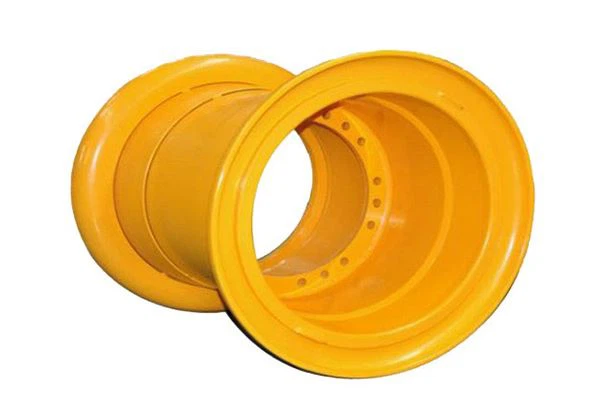
But here's the thing. Balancing OTR wheels isn't as straightforward as balancing car wheels. OTR wheels are much larger and heavier, and they operate in very different conditions. In some cases, the cost and effort of balancing might outweigh the benefits. For example, if a vehicle is used in a very rough and uneven terrain, like a mining site, the constant jolts and bumps can quickly throw the balance off again. So, you might end up spending money on balancing only to have it undone in a short period.
However, in other situations, balancing is definitely worth it. If a vehicle is used on relatively smooth surfaces, like a well - maintained industrial yard, balanced wheels can significantly improve the performance and longevity of the tires and the vehicle itself. Also, for vehicles that operate at higher speeds, even a small imbalance can cause big problems. Balancing helps to ensure a smooth and stable ride, which is crucial for both safety and efficiency.
So, how do you decide if your OTR wheels need balancing? Well, it depends on a few factors. First, consider the type of vehicle and its usage. If it's a high - speed vehicle or one that operates on smooth surfaces, balancing is a good idea. Second, think about the cost. You need to weigh the cost of balancing against the potential savings from reduced tire wear and fewer repairs.
If you're still not sure, you can always consult with a professional. They can inspect your wheels and tires and give you an expert opinion. At our company, we have a team of experienced technicians who can help you make the right decision. We can also provide balancing services if needed.
In conclusion, while not all OTR wheels necessarily require balancing, there are many situations where it can be extremely beneficial. Whether it's reducing tire wear, preventing vibrations, or improving overall vehicle performance, balancing is something that shouldn't be overlooked.
If you're in the market for high - quality OTR wheels or need advice on wheel balancing, don't hesitate to reach out. We're here to help you find the best solutions for your needs. Whether you're looking for 20 - 19.5/2.5tl Grain Transport Machine Wheels, 25 - 14.00 Loader Wheel, or 25 - 11.25/2.0 PORT MACHINERY WHEEL, we've got you covered. Let's start a conversation and see how we can work together to meet your requirements.
References:
- "Heavy - Duty Vehicle Systems" - A comprehensive guide on the mechanics and maintenance of heavy - duty vehicles.
- "Tire and Wheel Technology" - A book that delves into the science behind tire and wheel performance, including balancing.
Send Inquiry