

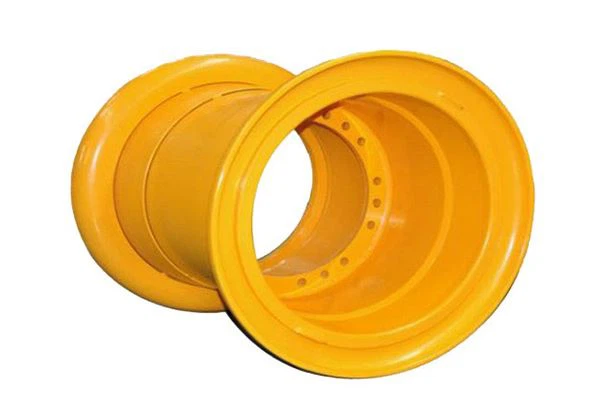
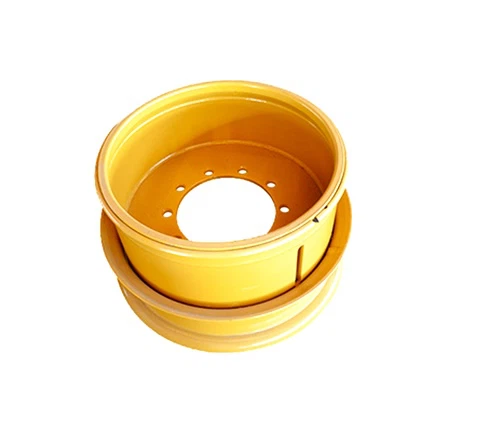
20-19.5/2.5tl Grain Transport Machine Wheels
Shandong Santeck Wheels Co.,Ltd is a research, development, manufacturing and sales company located in Guangrao County Economic Development Zone, Shandong Province.The company has 46 technicians and 1017 employees. It mainly produces steel rings and magnesium-aluminum alloy wheels of various models. The products are obtained from Smithers Papra, USA. DOT, Germany TUV, India ARA, Indonesia SIN, Brazil INMETRO, South Africa SABS, Japan VIA and other certifications.
Why Choose Us
Quality Control
In the processing of production, our professional technical engineers inspect the processing to ensure the quality of products,After our machine finish , our engineer will make 24 hours test constantly and ensure the machine reach to the best performance.
Customer Satisfaction
Providing after-sales services can enhance customer satisfaction by ensuring that customers' needs are met even after the purchase. This can lead to increased customer loyalty and positive word-of-mouth referrals.
One Stop Solution
From the begining inquiry and throughout the entire process until you receive the goods. we are dedicated to supporting you every step of the way.
Competitive Price
We have professional sourcing team and cost accounting team, stive to reduce cost and profit and provide you a good price.

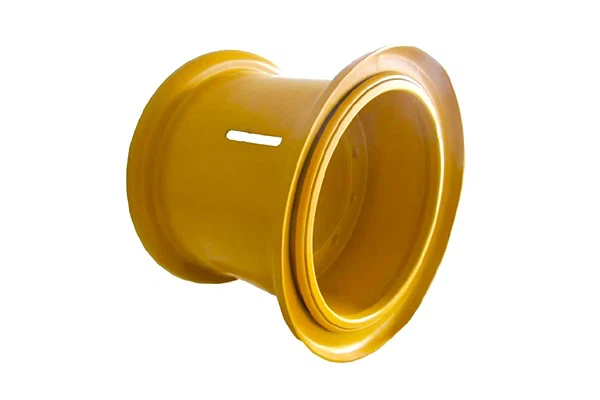
19.50/2.5-25 rim is composed of three parts: Rim base, side ring and lock ring, and there are two types.
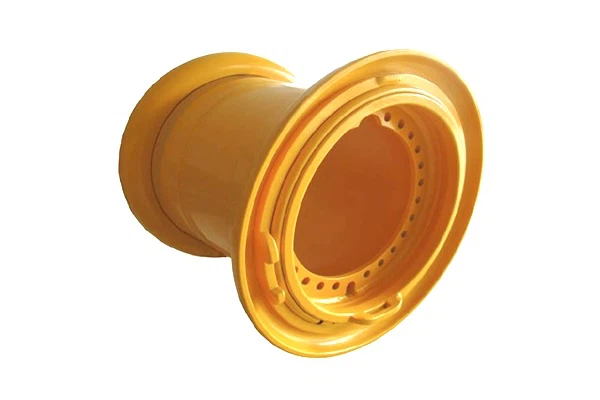
Our grader Rims are made of quality-stable materials and have been thoroughly tested by world-class equipment to meet stringent standards for all driving conditions.


25-19.5/2.5 Construction Equipment Tire Rim
Construction Equipment Tire Rims are mainly used for construction equipment, including wheels for loaders and mining truck series.
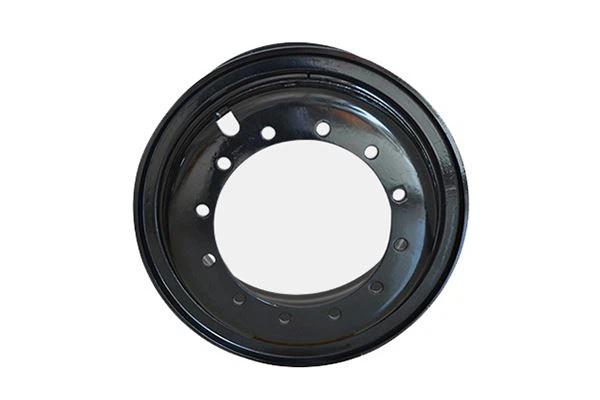
7.5-20 Steel Rim For Excavator Tire
Made of high-strength steel, non-fracture, high strength, universal strong real material, super-strength bearing.Excavator wheels are mainly used in excavator series.

6.5f-10otr Steel Wheels For Forklift
4 pieces of 6.5F -10 OTR wheel locking ring wheels suitable for forklifts

This forklift steel rim 4.33R-8 can be used for many types of forklifts.
Such as: CLGA 2.5 ton electric forklift, Heli G2 series three-wheel battery forklift with front drive wheel, XCB-P20 electric forklift, XCB-P30 electric forklift

What is 20-19.5/2.5tl Grain Transport Machine Wheels
Wheels are the metal or alloy rims that support a vehicle's tires, providing structural integrity and mounting points for tires. Tires are rubber or composite components that cover wheels, providing traction, cushioning, and grip on the road surface, enhancing vehicle handling and performance.
If you're looking to learn the diameter of your stock vehicle wheels – Sometimes thought of as wheel height, or how tall the wheel is – the easiest method is to review your tire size information.
The final number in your tire size (before the separate load index and speed rating) denotes both tire and wheel size.the size is 17 which translates to 17". This tire is fitted to a 17" wheel.
Determining wheel width is a bit trickier. The tire section width, which is the first number in the tire size sequence and expressed in millimeters, hints at the wheel width, but does not give a certain or conclusive answer. This is because any given wheel width can accommodate more than one tire width. A 225 millimeter section width tire,can be fitted to an 8" or 8.5" wide wheel.
To determine wheel width and the full specification details of your stock wheels, the dealership service department is often a good resource.with the full stock wheel specification in hand you can look for equivalents or close matches.
What components are used to make the wheel
Center Bore Is An Empty Hole Located Right At The Wheel's Centre. The Centre Bore Is Hidden By A Cap That Has The Manufacturer's Logo, Thus, You Won't Be Able To See It When The Wheel Is Fitted On The Car.
Rim Is The Outer Wheel's Diameter – When The Wheel Size Is Discussed, It's Normally The Rim's Diameter That's Considered.
Spokes Form The Structure That Hooks Up From The Plate To The Rim's Border. An Array Of Spoke Patterns With A Different Number Of Spokes, Shapes, Lengths And Diameters Are Available On The Market. Spokes Play A Vital Part In Uncovering The Strength And Weight Of A Wheel.
The Plate Is The Central Section Around The Centre Bore, Which Holds The Bolt Holes For The Lugs. It Bolts To The Wheel's Centre While The Spokes Bond The Rim To The Plate.
Valve Stem Bore Is An Opening (I.E. Hole) That Facilities Air To Be Inserted Inside The Tyre. The Valve Stem Is Made Up Of Metal Or Rubber Material.
The Bolt Circle Is Formed By The Centres Of The Bolt Holes, Wherein The Lugs Connect The Wheel To The Central Point.
The Outboard Face Is The Main Wheel's Face That Forms The Design You Can See On The Vehicle. Apart From The Style, The Outboard Face Lends Structure To The Wheel. Moreover, This Part Of The Wheel Is Normally Known As The Spider.
Things to Consider Before Upgrading Your Wheels
Understand your tires
You may have taken note of that set of numbers and letters on the sidewall of your tires but not known exactly what it means. Those identifiers are important in helping you understand what your tires can do for your car. The smallest tire available for a typical sedan, such as a Honda Civic, displays "215/55R 16 93H." The 215 figure refers to the section width of the tire, or the sidewall-to-sidewall distance, measured in millimeters. The number 55 refers to the aspect ratio of the sidewall against the section width of the tire. R stands for radial construction. The number 16 refers to the interior diameter that is designed to fit on a 16-inch wheel. The number 93 refers to the load index. The letter H refers to the tire's speed rating, which is good for 130 mph.
Hub size
To decide on the size of wheel you will use, you can measure the width and diameter. You also need to consider the bolt pattern to determine if the wheel will fit. The sizes of the wheel's hub depends on the vehicle's make and model. A typical 16-inch wheel has a five-lug bolt pattern. Bolt pattern is expressed in terms of measurements such as 5×100, which simply means that there are five wheel studs with a diameter of 100 millimeters. Make sure you have the right hub size and bolt pattern before you purchase a new set of wheels.
Fitting in
You may have considered size and bolt pattern, but you're not off the hook yet. You also need to consider the offset and backspacing. Offset refers to the distance from the wheel's dead center to its mounting surface, while backspacing refers to the distance from the wheel's back to the mounting surface. You must ensure that there is sufficient space in both the offset and backspacing.
Plus sizing
Installing a set of wheels that is larger than the stock is popular among car owners. It provides a sporty, luxurious look to the car, plus it lends more grip on the road.
Vehicle modifications refer to any changes or additions made since the vehicle left the factory, which doesn't include manufacturer options that are factory-fitted. Drivers typically buy new wheels for two reasons: They want to replace damaged wheels, or they want to give their vehicles a new and improved look. Wheels fitted to a vehicle make a big visual difference, and selecting the right wheels to complement a vehicle can be a great upgrade. It increases the visual appeal of the vehicle but it can also have a very positive improvement to the driveability.
Many people make the mistake of believing that the role of the wheel is purely aesthetic, but they would be wrong. Wheel rims and tyres affect the way your vehicle drives. Good wheel rims will be properly fitted and will make all the difference to the way your vehicle performs. Not all wheel rims will fit all types of vehicle; it depends heavily on the vehicle make, model, year, etc. Most modern-day vehicles come with factory-fitted alloy wheels. Steel wheels are often found on entry-level and older vehicles.
There are a number of common wheel rim terms that you should know before selecting wheel rims. These are:
Bolt pattern – Otherwise known as a lug pattern or bolt circle, this is the diameter of the circle formed by the wheel lugs, as seen on the exterior of the wheel rims. This is comprised of two numbers. The first is how many bolt holes are on the wheel and the second describes the diameter. For instance, 5×10⁸ would indicate a 5-lug bolt pattern within a 108mm diameter. Your vehicle's make and model possesses a unique bolt pattern, meaning any wheel rims purchased must be compatible with the specific type.
Hub centre bore – This is the central hole that keeps the wheel centred on the hub of the vehicle.
Torque – Wheels are always installed using a torque wrench, and freshly installed wheels should always be re-torqued after the first 100km in order to ensure that everything remains tight.
Offset – This refers to the distance from the hub mounting surface of the wheel through to its centre line. There are three types of offset: zero, positive, and negative. For zero offset, everything is even. Positive offset means that the mounting surface is leaning towards the front or wheel side of the centre line. Negative offset means that the mounting surface leans towards the back or brake side of the centre line.
Applications of the Wheel Loader
Block Handling
Wheel loaders for block handling call for hard lifting and moving blocks at all hours of the day, even on crooked, muddy, and steep terrain.
Log Handling
Applications for handling logs are created with a large capacity, flexibility, and a variety of attachments for cutting, transporting, etc.
Rock Handling
The performance and outcomes of these loaders have been maximized during design and construction. The strength, stability, traction, and longevity of rock handling loaders are sufficient to survive hot, dusty situations.
Waste Handling
Waste loaders are designed specifically for use in a variety of waste and recycling applications, including collection, transportation, and sorting. These devices, which can handle any garbage, large or small, are frequently utilized in landfill locations.
Agriculture
These loaders may operate continuously throughout the day. Even in the worst weather and ground conditions, agriculture loaders can move a variety of loads across farms and may be utilized indoors or outdoors.
Slag Handling
Usually found in steel mills. One of the most challenging types of loaders is the slag handling loader. They can be handled in the most hazardous environment like extreme heat, dust, and poisonous gases. Finishing these tasks requires the use of these loaders, which offer thermal protection and heatproofing.
The most immediate consequence of driving on out-of-balance wheels is accelerated tread wear. There can be a number of root causes of tread wear but balance problems cause a signature pattern of patchy wear or cupping (dips in the tread that span the tyre laterally). If not dealt with, this wear can rub years off your tyres' lives.
Another potential effect of driving on unbalanced wheels is damage to your bearings or suspension components. Unbalanced wheels tend to bounce up and down, putting extra strain on the components and potentially setting you up for very costly repairs.
The effects of unbalanced wheels in the form of additional vibrations as you move down the highway can make the vehicle uncomfortable and in extreme cases even unsafe.
5 Ways Your Tyres and Rims Work Together
1. Wheels provide the structural integrity tyres need to stay attached to the vehicle.
2. Wheels put the tyres in motion, but the tyres create friction with the ground to move the vehicle forward.
3. Wheels support the tyres, helping them bear the vehicle load.
4. Wheels connect tyres to the car's braking and steering mechanisms.
5. When a flat tyre happens, the wheels may keep your car moving, but you lose control. This highlights the vital role of tyres in vehicular handling and your safety.
Our Factory
Shandong Santeck Wheels. Co.,Ltd, products for domestic and foreign markets, has been sold to Europe and the United States, Russia, the Middle East, Southeast Asia, Africa and other countries and regions. The company follows the philosophy of "Building a brand with quality and winning customers with service" to create world-class quality wheels for global users.

FAQ
Hot Tags: 20-19.5/2.5tl grain transport machine wheels, China 20-19.5/2.5tl grain transport machine wheels manufacturers, factory, forklift wheel, off road wheels for mud, off road wheels for dune bashing, off road wheels for short trips, off road wheels for people who are comparing the price and quality of different off road wheels, 19 5 25 2 5loader Wheel
You Might Also Like


Send Inquiry