

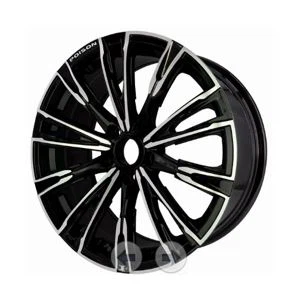
5 Hole Alloy Car Wheel
Shandong Santeck Wheels Co.,Ltd is a research, development, manufacturing and sales company located in Guangrao County Economic Development Zone, Shandong Province.The company has 46 technicians and 1017 employees. It mainly produces steel rings and magnesium-aluminum alloy wheels of various models. The products are obtained from Smithers Papra, USA. DOT, Germany TUV, India ARA, Indonesia SIN, Brazil INMETRO, South Africa SABS, Japan VIA and other certifications.
Why Choose Us
Quality Control
In the processing of production, our professional technical engineers inspect the processing to ensure the quality of products,After our machine finish , our engineer will make 24 hours test constantly and ensure the machine reach to the best performance.
Customer Satisfaction
Providing after-sales services can enhance customer satisfaction by ensuring that customers' needs are met even after the purchase. This can lead to increased customer loyalty and positive word-of-mouth referrals.
One Stop Solution
From the begining inquiry and throughout the entire process until you receive the goods. we are dedicated to supporting you every step of the way.
Competitive Price
We have professional sourcing team and cost accounting team, stive to reduce cost and profit and provide you a good price.

Automobile alloy wheel hub is a kind of high-performance wheel hub widely used in modern automobiles.

Automobile alloy wheel hub is a kind of high-performance wheel hub widely used in modern automobiles.

19*8.5 Forged Offroad Alloy Wheels
Our company produces various types of alloy wheels suitable for off-road vehicles.

22.5*9.75 Passenger Car Wheels
The wheel hub of 22.5 is especially suitable for passenger car wheels, especially buses. The wheels of this specification bear the needs of a large number of passengers.

The cast wheel has high hardness, wear resistance, simple manufacturing process, easy molding and low cost.

Aluminum alloy wheel hub has the characteristics of light weight, good heat dissipation and beautiful metallic texture.

18~22 Custom 2-Pc Sport Car Wheel Rims
Our products include forged wheels (A6061-T6 forged by 10,000 ton rotary pressure ), including custom styling wheels , heavy duty wheels , off - road wheels , ultra light performance wheels , flow forming wheels , heavy - duty cast wheels (A356.2-T6 low pressure casting ) and other special purpose wheels etc .

Car for wheels 12/13/14/15/16/17/18/19/20/21/22/23/24/26 sedan Sports Car suv sedan.

17x7.5 Classic Design Alloy Wheels
We produce various designs 12/13/14/15/16/1718/19/20/21/22/23 inch,parameter suit to VW/GMC/KIA/TOYOTA ect brand,also offroad/4*4. New mould aprroved if you have wonderful ideas.
What is 5 Hole Alloy Car Wheel
5-hole rims are considered a balanced option that offers good stability and aesthetic appeal.
Tips for Choosing the Right Alloy Wheels
Wheel Size
It's crucial to select the correct wheel size for your vehicle. Refer to the manufacturer's recommendations or consult with a professional to ensure a proper fit. Choosing the wrong size can negatively impact your car's performance and safety. Factors to consider include diameter, width, and offset, which determine how the wheels align with the suspension and body of your car.
Load Rating
Pay attention to the load rating of the alloy wheels you're considering. This rating indicates the maximum weight each wheel can safely support. It's essential to choose wheels with a load rating that meets or exceeds the weight of your vehicle and any additional load it may carry. This ensures optimal performance and durability.
Bolt Pattern and Center Bore
Ensure that the bolt pattern of the alloy wheels matches your car's hub pattern. The bolt pattern refers to the number of bolts and the spacing between them.consider the center bore, which is the hole in the center of the wheel that fits over the hub. The center bore diameter should match your car's hub diameter for a proper fit.
Material Quality
Assess the quality of the alloy wheels you're considering. Look for reputable brands known for their high-quality manufacturing processes and materials. Consider factors such as the alloy composition, heat treatment methods, and structural integrity. High-quality alloy wheels are more likely to provide long-lasting performance and withstand the demands of daily driving.
Finish Durability
Choose a finish that can withstand the wear and tear of the road. Different finishes have varying levels of durability. For example, painted finishes may be more susceptible to chips and scratches, while chrome or powder-coated finishes tend to be more resistant. Consider your driving conditions and maintenance preferences when selecting a finish that will maintain its shine and appearance over time.
Weight Considerations
While alloy wheels are generally lighter than steel wheels, there can still be variations in weight among different designs and brands. Consider the weight of the wheels you're considering and how it may impact your car's performance. Lighter wheels can enhance acceleration, braking, and overall handling, but it's essential to strike a balance between weight reduction and structural integrity.
Types of Alloy Wheels
One-Piece Alloy Wheels
Alloy wheels machined entirely from a single metal block in one piece are the most common type in passenger vehicles today. This monoblock technique allows for clean, consistent styling lines and structural integrity. One-piece alloy wheel construction ranges from basic disc shapes to complex spoke formations.
Two-Piece Alloy Wheels
Two-piece or "modular" alloy wheel construction consists of two sections - An inner aluminium alloy structural rim base welded to an outer steel or alloy barrel that bolts onto the wheel hub and forms the outer tread surface. Two-piece wheels allow more customisation flexibility on diameters, depths, and design elements.
Three-Piece Alloy Wheels
Three-piece alloy wheel systems take the customisation even further. They feature an inner rim hoop, middle spoke components, and an external outer rim that bolts together to enable bespoke combinations. Three-piece alloy wheel builds allow for deeper concavity designs and easier repair of light curb damage.
Forged Alloy Wheels
Forged alloy wheels stand up to harsh conditions in performance and racing environments. Forging delivers more freedom over sophisticated designs than casting with its flowing metal-shaping abilities. However, lower material yield rates mean substantially higher costs.
Carbon Fibre Wheels
Exotic hypercars and elite racing vehicles are starting to adopt even lighter carbon fibre composite wheels. Made by layering carbon fibre cloths into moulds with epoxy resins and then oven curing, carbon wheels offer extreme rigidity and reduced rotational mass for faster acceleration.
Flow Formed Alloy Wheels
This specialised manufacturing procedure uses a regular cast alloy wheel and extreme roller pressure against the rim to "flow" or compress the aluminium into its final shape. The flow-forming process enables smoother, stronger curves & bulges than direct casting.
Spun Alloy Wheels
Primarily seen on older vehicles, spun alloy wheels involve artisan specialists using a spinning lathe to shape hot solid aluminium discs into one-piece wheels manually. Spun construction allows for prototypes & limited runs where expensive casting tooling isn't practical.
Monoblock Alloy Wheels
Any alloy wheel machined or cast as a single integrated piece is often called a "monoblock." This highlights the one-piece design with no joints versus modular construction methods. Monoblock alloy wheels span simple one-piece discs to complex multi-spoke styles in a single-flowing form.
Multi-Piece Alloy Wheels
Any alloy wheel comprised of two more sections, including modular two-piece, three-piece, and even four-piece designs sometimes found on heavy-duty vehicle applications, falls under the multi-piece category. Multi-piece wheels allow for greater customisation and replaceability.
Beadlock Alloy Wheels
Beadlock rims utilise an additional outer locking ring bolted onto the wheel to clamp down tyre beads and allow ultra-low inflation pressures for off-roading. This lets tyres conform and grip rough terrain better without slipping the rim. But bead locks add expense and make tyre swaps more difficult.
Car wheel damage: Causes and symptoms
Causes of car wheel damage
The following are the main reasons why car wheels break or wear out:
Hitting potholes, curbs, speed bumps, or road debris can cause dents, bends or cracks in the wheel rims.
Collisions with other vehicles, stationary objects or obstacles on the road can result in significant damage to the wheels.
Carrying heavy loads or towing trailers beyond the vehicle's weight capacity can put excessive stress on the wheels, leading to premature wear and potential damage. This will cause bent tyre rims and result in pressure loss and other failures.
Incorrect tyre mounting procedures result in a bad valve stem, leading to air leaks which require fixing.
Avoiding regular maintenance tasks, such as tyre rotation, wheel alignment or checking tyre pressure, can accelerate wear and tear on the wheels and tyres.
Symptoms of car wheel damage
The following are the symptoms of damaged car wheels:
Vibrations or shaking in the steering wheel or vehicle chassis, especially at higher speeds, are causes of wheel imbalance, bent tyre rims, or suspension problems.
The vehicle pulling to one side while driving can be due to improper wheel alignment.
It can result in different types of tyre tread wear. When you change these tyres, make sure to get the wheel alignment.
Unusual noises from the wheels or tyres, such as squealing, grinding, or clicking sounds also indicate broken or damaged car wheels.
1. Ensure that you have the right type of bolts, as they are available in a large variety of diameters, threads and seatings.
2. Ensure that you have the 4 plastic spigot rings which help the interface between the wheel and the hub.
3. Ensure that your handbrake or parking brake is applied and then jack up your car.
4. Put a wheel up to your car and make sure that the bolt holes are aligned correctly, the wheel is correctly located on the hub and that there is wheel arch, suspension strut and brake arch clearance.
5. Tighten the bolts and nuts to the manufacturer's specified torque – Usually about 75% of maximum tightness.
6. Take the jack off your car.
What are the parts of the wheel
Hub
Found right smack at the wheel's centre is the hub. Covered by the centre cap, the hub contains a hole that attaches the wheel to the axle. The brake discs rest against the hub, ensuring that the car stops when you step on the brake.
Centre Disc
The centre disc connects, in one way or another, to all the wheel parts, and it is the contact point to the seat of the axle and the lug holes.
Lug Holes
Lug holes or bolt holes are the bolt circles on the centre disc. The wheel is fastened to the studs, which fit into the lug holes. The lug hole is measured to get the pitch circle diameter ((PCD). The PCD and the number of holes determine the bolt pattern, which is essential when changing wheels.
Spokes
Running from the hub to the rim are the spokes, which protect the wheel's outer edge. Spokes have also become an essential part of wheel aesthetics-Ranging from the classic five-spoke design to the more modern Y-shaped pattern.
Rim
People often interchange rims with wheels, but actually, the rim is part of the wheel. This strong steel is curved around the hub and forms the wheel's outer edge. When fitting new tyres, your mechanics should be careful because any problems with wrong installation or a damaged rim might damage the bead of the tire.
Outer Lip
Also called rim lip, the outer lip is usually the first wheel part damaged by a kerb or pothole. Wheels that have spokes designed farther from the outer edge are called deep outer wheels or deep-dish wheels. This design may look nice, but it prevents the spokes from protecting the outer lip, making it more prone to damage.
Barrel
The barrel contains the drop centre and flanges that make tyre fitting possible. The tyre hugs the barrel, which gives the rubber its shape. The barrel then seals the open end of the tyre, preventing it from leaking air.
Valve Stem
Usually made of rubber or metal, the valve stem is where you put the air to inflate the tyres. You use this to check tyre pressure manually or through your Tire Pressure Monitoring System (TPMS) system.
Our Factory
Shandong Santeck Wheels. Co.,Ltd, products for domestic and foreign markets, has been sold to Europe and the United States, Russia, the Middle East, Southeast Asia, Africa and other countries and regions. The company follows the philosophy of "Building a brand with quality and winning customers with service" to create world-class quality wheels for global users.

FAQ
Hot Tags: 5 hole alloy car wheel, China 5 hole alloy car wheel manufacturers, factory, tubeless truck wheels, 7 5 20 Steel Rim for Excavator Tire, aluminum alloy wheels, 24 10 00 Grader Rim, alloy wheels, 7 5 20 Steel Wheel Blue
You Might Also Like


Send Inquiry