


20inch Classic Design Alloy Wheels
Shandong Santeck Wheels Co.,Ltd is a research, development, manufacturing and sales company located in Guangrao County Economic Development Zone, Shandong Province.The company has 46 technicians and 1017 employees. It mainly produces steel rings and magnesium-aluminum alloy wheels of various models. The products are obtained from Smithers Papra, USA. DOT, Germany TUV, India ARA, Indonesia SIN, Brazil INMETRO, South Africa SABS, Japan VIA and other certifications.
Why Choose Us
Quality Control
In the processing of production, our professional technical engineers inspect the processing to ensure the quality of products,After our machine finish , our engineer will make 24 hours test constantly and ensure the machine reach to the best performance.
Customer Satisfaction
Providing after-sales services can enhance customer satisfaction by ensuring that customers' needs are met even after the purchase. This can lead to increased customer loyalty and positive word-of-mouth referrals.
One Stop Solution
From the begining inquiry and throughout the entire process until you receive the goods. we are dedicated to supporting you every step of the way.
Competitive Price
We have professional sourcing team and cost accounting team, stive to reduce cost and profit and provide you a good price.
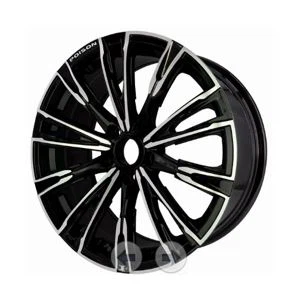
Automobile alloy wheel hub is a kind of high-performance wheel hub widely used in modern automobiles.

Automobile alloy wheel hub is a kind of high-performance wheel hub widely used in modern automobiles.

19*8.5 Forged Offroad Alloy Wheels
Our company produces various types of alloy wheels suitable for off-road vehicles.

22.5*9.75 Passenger Car Wheels
The wheel hub of 22.5 is especially suitable for passenger car wheels, especially buses. The wheels of this specification bear the needs of a large number of passengers.

The cast wheel has high hardness, wear resistance, simple manufacturing process, easy molding and low cost.

Aluminum alloy wheel hub has the characteristics of light weight, good heat dissipation and beautiful metallic texture.

18~22 Custom 2-Pc Sport Car Wheel Rims
Our products include forged wheels (A6061-T6 forged by 10,000 ton rotary pressure ), including custom styling wheels , heavy duty wheels , off - road wheels , ultra light performance wheels , flow forming wheels , heavy - duty cast wheels (A356.2-T6 low pressure casting ) and other special purpose wheels etc .

Car for wheels 12/13/14/15/16/17/18/19/20/21/22/23/24/26 sedan Sports Car suv sedan.

17x7.5 Classic Design Alloy Wheels
We produce various designs 12/13/14/15/16/1718/19/20/21/22/23 inch,parameter suit to VW/GMC/KIA/TOYOTA ect brand,also offroad/4*4. New mould aprroved if you have wonderful ideas.
What is 20inch Classic Design Alloy Wheels
Alloy wheels are rims manufactured using a blend of different materials, commonly magnesium or aluminium. The use of these materials, as opposed to steel rims, helps increase the car's performance due to their lightweight counterparts.
Improved Handling & Control
Reduced rotational and unsprung weight lowers suspension inertia allowing wheels to react faster with more precision through turns and uneven roads. Alloy wheels quite literally provide a grippier connection to the pavement below.
Faster Acceleration
Lightweight alloy materials mean reduced load for vehicle powertrains to get rolling, resulting in quicker acceleration and a livelier performance. Even modest family cars benefit from sportier step-off and passing power with alloys.
Enhanced Braking Efficiency
Again, limiting mechanical mass in motion means vehicle momentum carries less energy, allowing alloy wheels to draw to a halt smoothly with less heat buildup and reduced stopping distances. Upgraded brakes then become necessary to balance the capabilities equation.
Increased Fuel Economy
The EPA estimates a 10% reduction in wheel weight can improve fuel consumption by as much as 2% based on reduced inertia.even with their premium pricing, alloy wheels can pay back savings at the pump over decades of ownership.
All-Weather Durability
Unlike old steel wheels with hidden corrosion issues from road salt and winter precipitation, alloy metals resist damage while maintaining integrity and appearance in any condition over the long term.
7 Tips for Buying Wheels
Prioritise the bolt pattern.
Examine the bolt or stud pattern of your old wheels. Your new wheels should match it, or else you won't be able to mount them. You should look for two things: the number of bolts and the distance between the two bolts at opposite ends.
Get the correct rolling diameter.
A tyre's rolling diameter, also called overall or outside diameter, is the sum of the sidewall height multiplied by two (since each tyre has two sidewalls) and the wheel diameter. Look at your tyre's sidewall numbers for the measurements.
Pay attention to the offset.
Watch out for their offset or the measurement from the wheel's mounting hub to the centre line when changing wheels.
Upsize with care.
Bigger wheels are undoubtedly eye-catching, but bigger doesn't necessarily mean better. Remember that the bigger wheels and tyres, the heavier they get. When this happens, your ride may be harsher because of the additional weight on your suspension. If you upsize the wheels, you must change your tyres with lower sidewalls to maintain the right rolling diameter.less rubber on your tyres means less shock-absorbing ability and protection against road hazards and debris.
Choose between alloy and steel wheels.
Both wheel types have their pros and cons. While alloy wheels are more expensive, less durable, and difficult to repair, they come in varied and appealing designs and give better performance and fuel economy. Steel wheels are sturdier against damage, more affordable, and easier to repair.they don't look like the wheels you see in James Bond movies. Steel wheels don't come in sleek designs; they use up more fuel because they're heavier.
Buy within your budget.
Wheels are costly, especially when you buy them as a set, which can set you back from hundreds to thousands of dollars. The fancier they are, or if you go for customisation, the pricier they get. Remember to factor in the wheel installation fees in your budget.
Only purchase from reputable shops.
A dizzying array of wheels is available so that you may get overwhelmed. But if you buy from tried-and-tested stores, you will get original, brand-new, dependable wheels.These wheels have passed the Australian Design Rules, ensuring their quality and durability. Buying cheap or fake ones compromises your safety because wheels constantly handle heavy loads and driving impacts. When a wheel breaks, you lose control of your ride.
Different Types of Alloy Wheels
One-Piece Alloy Wheels
One-piece alloy wheels are one of the most common types of alloy wheels available in the market. They come in a variety of styles and offer budget-friendly options to ensure better affordability for the same benefits for everyone.
These wheels are crafted as a solid single unit, making them a lightweight addition to any car to enhance the car's performance without adding too much weight and pressure. They are ideal for everyday driving.
Two-Piece Alloy Wheels
These alloy wheels consist of a forged barrel and a centre cast section. Each of these additions impacts different aspects of the wheel. They are commonly used in high-performance cars.
While the centre cast section enhances the look of the car wheels with their design language, the forged barrel directly impacts the car's performance as it adds significant strength to the car, improving its balance.
Three-Piece Alloy Wheels
Three-piece alloy wheels contain three parts. An inner rim, an outer rim, and a solid aluminium block. Given the separate sections and the integration of the solid aluminium block, the durability of these wheels is higher.
Even with the three-piece design, these alloy wheels are more lightweight, enhancing car performance.
Multi-Piece Alloy Wheels
These alloy wheels are similar to one-, two-, and three-piece alloy wheels.multi-piece alloy wheels allow the car owner to customise the wheel design and performance completely.
Based on the individual requirements, you can decide the number of components above three you require in the wheel for the type of performance you are aiming for.
These wheels are commonly popular for race cars or highly modified cars and are not the best option for everyday driving.they are also more expensive due to their complexity.
Forged Alloy Wheels
The key difference for this category of alloy wheels is the manufacturing process. These wheels are made of an aluminium block, which undergoes an extensive forging process. The high-pressure process uses a strong spinning mould instead of the traditional forging die.
These wheels are also lightweight and offer better handling control and high performance, making them ideal for race cars.due to the forging process, the car alloy wheel price range for this category is on the expensive side.
Spun Alloy Wheels
Similar to forged alloy wheels, spun alloy wheels are also crafted using the forging process. These wheels also undergo a high-pressure forging process using a spinning mould, but the performance enhancement is more suitable for everyday driving.
The process makes the wheel lightweight, but due to limited performance enhancement, the price range for this alloy wheels category is on the affordable side when compared to forged wheels.
Carbon Fibre Alloy Wheels
These alloy wheels offer a unique combination of carbon fibre and aluminium. The wheel is manufactured with carbon fibre with an inner rim of strong aluminium, providing a favourable ratio of weight and strength.
The integration of carbon fibre allows better heat dissipation for the wheels, making it an ideal wheel category for high-end racing cars. Due to these unique features, the pricing of carbon fibre alloy wheels is on the higher side.
Flow-Formed Alloy Wheels
Another category of alloy wheels is flow-formed alloy wheels. These wheels are also called flow-forged wheels because the manufacturing process includes a mix of forging and casting.
Due to the mix of these two processes, the wheels are lightweight and offer great performance but are more affordable than fully forged alloy wheels.
Monoblock Alloy Wheels
These alloy wheels are similar to one-piece alloy wheels.they are more straightforward in nature as they are manufactured using only one piece of aluminium but with stronger design language.
This makes these wheels a better budget-friendly alternative to the traditional one-piece alloy wheels mentioned above.
• Avoid hitting obvious dangers such as potholes, kerbs and raised manhole covers.
• If you regularly drive on a road that has any of these obstacles present, remember where you'll come across then or perhaps consider taking an alternative route.
• Watch out for cars ahead of you to see if they swerve to avoid any obstacles.
• Be mindful of 'freeze/melt' cycles where water seeps into a crack and freezes, breaking up the concrete around it, before melting and causing the crack to expand into a full-blown pothole.
• Avoid puddles, full stop. It's unlikely that you would drive into a puddle in any case, but be particularly mindful of it on potholed roads or after freeze/melt cycles. A seemingly miniature puddle could be concealing a substantial pothole.
• If you hit upon a sneaky pothole, or you have no alternative but to hit it, try to drive through it rather than being tempted to slam on the brakes. Driving straight through it will spread out any damage evenly across the whole wheel, whereas slamming a brake-locked wheel into it will concentrate the force of the impact on a particular area, which is more likely to damage the wheel significantly.

Check Your New Alloys Will Fit Your Wheel
It is important when upgrading your alloy wheels to check the Pitch Circle Diameter (PCD) and the wheel offset, as you need to make sure that your new alloy wheels align with the central wheel hub.
The PCD refers to the number of holes for the wheel studs and the spacing between two holes sitting opposite each other. While the wheel offset concerns the centre wheel alignment and the correct mounting to the axle. Failure to do this properly risks causing damage to the suspension and brakes, as well as the handing and steering of your car.
Mount Your New Alloy Wheel
Using the necessary spacing rings and bolts included with your new alloys, correctly fit the alloy wheel to the centre of the axel, eliminating any movement and vibrations with a secure fitting. Also make sure there is sufficient space around the wheel from your wheel arch, suspension and brakes, by spinning the wheel.
Correct Your Alloy Offset
Alloy wheel offset is an important part of the fitting as it determines the position of the wheel on the axle. Particularly if you have fitting larger alloy wheels, making sure the offset is correct is important to avoid rubbing or friction is extremely important – Make changes to your fitting if any contact is made.
Check Your Car Manufacturers Recommendations
As tempting as it is to bolt on any size alloy wheels to your vehicle, the wheels and tyres should always follow your car manufacturer's recommended sizes and load ratings. Balance and adjust your tyres, ensuring your wheel torque and tyre inflation are correctly adjusted to your car maker's advice, to secure your car handling and performance.
Our Factory
Shandong Santeck Wheels. Co.,Ltd, products for domestic and foreign markets, has been sold to Europe and the United States, Russia, the Middle East, Southeast Asia, Africa and other countries and regions. The company follows the philosophy of "Building a brand with quality and winning customers with service" to create world-class quality wheels for global users.

FAQ
Hot Tags: 20inch classic design alloy wheels, China 20inch classic design alloy wheels manufacturers, factory, contemporary car wheels, safe car wheels, unbalanced car wheels, aluminum car wheels, delivery car wheels, exclusive car wheels
You Might Also Like


Send Inquiry