

What should I look for when inspecting steel wheels?
Aug 11, 2025
Leave a message
When it comes to inspecting steel wheels, as a seasoned steel wheel supplier, I've gathered a wealth of knowledge and practical experience. In this blog, I'll share the key aspects to look for during the inspection process, ensuring that you make informed decisions and acquire high - quality steel wheels.
1. Structural Integrity
One of the primary concerns when inspecting steel wheels is their structural integrity. The wheel should be free from any visible cracks, fractures, or significant deformations. Cracks can start small but can quickly propagate under the stress of normal use, leading to catastrophic wheel failure.
To check for cracks, use a magnifying glass and carefully examine the entire surface of the wheel, paying close attention to areas around the bolt holes, the bead seat, and the rim flange. These are high - stress areas where cracks are most likely to develop. If you spot any cracks, even if they seem minor, the wheel should be rejected as it poses a serious safety risk.
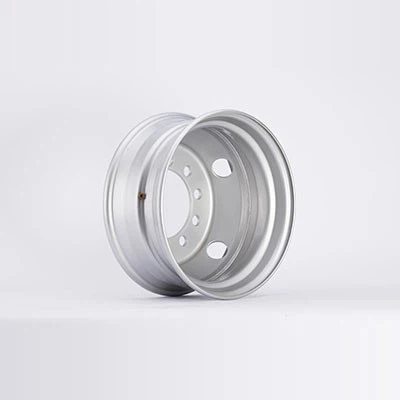

Deformations can occur due to impacts, such as hitting a pothole or a curb. Look for any signs of warping, dents, or bulges. A warped wheel can cause uneven tire wear, vibration while driving, and can even affect the vehicle's handling. Minor dents may be repairable, but significant bulges or severe warping usually mean the wheel is no longer fit for use.
2. Surface Finish
The surface finish of a steel wheel is not just about aesthetics; it also plays a crucial role in the wheel's durability. A smooth, uniform surface finish helps prevent corrosion and provides better adhesion for paint or other protective coatings.
Inspect the wheel for any rough spots, pits, or rust. Rust can start as small specks but can quickly spread and weaken the wheel over time. If the rust is limited to the surface, it may be possible to remove it and apply a new protective coating. However, if the rust has penetrated deep into the metal, the wheel may need to be replaced.
The paint or coating on the wheel should be evenly applied and free from bubbles, runs, or peeling. A poor - quality paint job not only looks bad but can also expose the steel to the elements, increasing the risk of corrosion.
3. Dimensional Accuracy
Accurate dimensions are essential for a steel wheel to fit properly on a vehicle. Check the wheel's diameter, width, and offset. The diameter should match the tire size specified for the vehicle. An incorrect diameter can cause problems with tire fitment, speedometer accuracy, and overall vehicle performance.
The width of the wheel is also critical. It affects the tire's contact patch with the road, which in turn impacts traction, handling, and tire wear. A wheel that is too narrow or too wide for the tire can lead to uneven tire wear and reduced performance.
Offset refers to the distance between the wheel's mounting surface and its centerline. Incorrect offset can cause the wheel to sit too far in or out from the vehicle's body, which can affect steering, suspension, and the overall appearance of the vehicle.
4. Bolt Pattern and Hub Bore
The bolt pattern and hub bore are two important factors that determine whether a wheel will fit a particular vehicle. The bolt pattern is the number of bolts and the diameter of the circle they form. It must match the vehicle's bolt pattern exactly. If the bolt pattern is incorrect, the wheel cannot be properly mounted on the vehicle.
The hub bore is the hole in the center of the wheel that fits over the vehicle's hub. It should be the same size as the vehicle's hub diameter. A hub bore that is too small will not fit over the hub, while a hub bore that is too large can cause the wheel to wobble, leading to vibration and uneven tire wear.
5. Balancing
A well - balanced wheel is essential for a smooth and comfortable ride. Unbalanced wheels can cause vibration, which can lead to premature tire wear, suspension damage, and driver fatigue.
During the inspection, check if the wheel has any visible signs of imbalance, such as uneven tire wear or excessive vibration during a test drive. Most modern wheels come with balance weights attached to the rim. Inspect these weights to ensure they are securely attached and in the correct position.
If you suspect a wheel is unbalanced, it can be tested using a wheel balancer. A professional wheel balancer can accurately measure the amount of imbalance and determine the correct position for additional balance weights.
6. Compatibility with Tires
Steel wheels must be compatible with the tires they are intended to use. Check the wheel's load rating, which indicates the maximum weight the wheel can safely support. The load rating of the wheel should be equal to or greater than the load rating of the tire.
Also, consider the type of tire valve that the wheel is designed for. Some wheels are designed for tubeless tires, while others require an inner tube. Using an incompatible tire valve can lead to air leakage and tire failure.
Examples of Our Steel Wheels
We offer a wide range of high - quality steel wheels to meet different customer needs. For example, our Rims Of Steel 9.00*22.5 are known for their durability and strength, making them ideal for heavy - duty trucks. Our Steel Without Inner Tube 17.5*6.75 wheels provide a convenient and reliable option for vehicles that require tubeless tires. And if you're looking for a more lightweight option, our 22.5*7.5 Aluminum Wheel for Commercial Truck offers excellent performance and a sleek appearance.
Conclusion
Inspecting steel wheels is a comprehensive process that requires attention to detail. By checking for structural integrity, surface finish, dimensional accuracy, bolt pattern, hub bore, balancing, and tire compatibility, you can ensure that you are getting a high - quality wheel that will provide safe and reliable performance.
If you are in the market for steel wheels and have specific requirements or questions, we are here to help. Contact us for more information and to discuss your procurement needs. We are committed to providing the best products and services to our customers.
References
- "Wheels and Tires Handbook" by an industry - recognized author.
- Technical manuals from leading wheel manufacturers.
Send Inquiry