

What materials are agricultural wheels usually made of?
Nov 05, 2025
Leave a message
Hey there! As a supplier of agricultural wheels, I've been getting a lot of questions lately about what materials these wheels are usually made of. So, I thought I'd take a few minutes to break it down for you.
Steel Wheels
One of the most common materials for agricultural wheels is steel. Steel wheels are known for their durability and strength. They can handle heavy loads and rough terrains without much trouble. This makes them a great choice for large tractors and other heavy - duty agricultural equipment.
The process of making steel agricultural wheels involves several steps. First, the steel is cut into the right shape and size. Then, it goes through a forming process where it's bent and shaped into the wheel structure. After that, it's welded together to ensure a strong bond. Finally, it's treated with a coating to prevent rust and corrosion.
Steel wheels have some great advantages. They're very resistant to wear and tear, which means they'll last a long time. They can also support a high amount of weight, so you don't have to worry about them breaking under heavy loads. However, they do have a few drawbacks. Steel wheels are relatively heavy, which can increase the fuel consumption of the equipment. Also, they can be more expensive to produce compared to some other materials.
If you're in the market for steel agricultural wheels, we have some great options. Check out our W12*38 Tractor Wheel. It's made of high - quality steel and is designed to handle tough agricultural tasks.
Aluminum Wheels
Aluminum is another popular material for agricultural wheels. Aluminum wheels are much lighter than steel wheels. This is a big advantage because it reduces the overall weight of the equipment, which in turn can improve fuel efficiency.
The manufacturing process of aluminum wheels is different from that of steel wheels. Aluminum is melted and then poured into a mold to form the wheel shape. After that, it goes through a machining process to get the precise dimensions and finish.
Aluminum wheels are corrosion - resistant, which means they'll look good and last a long time, even in harsh agricultural environments. They also have a better heat dissipation property compared to steel wheels. This can be beneficial for the brakes and other components of the equipment.
However, aluminum wheels are not as strong as steel wheels. They may not be suitable for extremely heavy - duty applications. But for lighter agricultural machinery, they're a great choice. Take a look at our W10×24 Tractor Wheels. They're made of aluminum and offer a good balance between weight and performance.
Rubber Wheels
Rubber wheels are commonly used on smaller agricultural equipment like hand - pulled carts, garden tractors, and some types of harvesters. Rubber provides a smooth and quiet ride. It also has good shock - absorption properties, which can reduce the impact on the equipment and the operator.
The rubber used in agricultural wheels is usually a special compound that's designed to be resistant to wear, tear, and chemicals. It's molded onto a metal or plastic core to form the wheel.
Rubber wheels are very flexible, which allows them to adapt to different terrains easily. They also have good traction, which is important for moving the equipment forward. But rubber wheels have a limited load - carrying capacity compared to steel or aluminum wheels. They can also be damaged by sharp objects on the ground.
Plastic Wheels
Plastic wheels are a more recent addition to the agricultural wheel market. They're lightweight, inexpensive, and easy to manufacture. Plastic wheels are often used on small, low - cost agricultural equipment.
The plastic used in these wheels is usually a high - strength polymer. It can be molded into different shapes and sizes using injection molding or other processes.

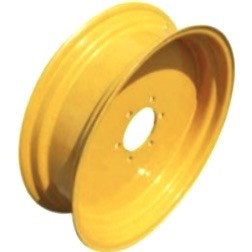
Plastic wheels are resistant to corrosion and chemicals, which makes them suitable for use in wet or chemical - laden environments. They're also very quiet in operation. However, they're not as strong as steel, aluminum, or even rubber wheels. They may crack or break under heavy loads or rough handling.
Composite Wheels
Composite wheels are made by combining different materials, usually a combination of fibers (like carbon fiber or fiberglass) and a resin matrix. These wheels offer a unique combination of strength, light weight, and durability.
Composite wheels can be designed to have specific properties depending on the application. For example, they can be made to be very strong in one direction while remaining lightweight. They're also resistant to corrosion and fatigue.
The manufacturing process of composite wheels is more complex and expensive compared to other materials. But for high - performance agricultural equipment where weight and strength are critical, composite wheels can be a great choice.
If you're looking for a heavy - duty option, our DW28*30 Tractor Wheel is a great example of a well - made wheel that can handle tough jobs.
So, there you have it! These are the main materials that agricultural wheels are usually made of. Each material has its own advantages and disadvantages, and the choice depends on your specific needs and requirements. Whether you need a heavy - duty steel wheel for a large tractor or a lightweight aluminum wheel for a smaller piece of equipment, we've got you covered.
If you're interested in purchasing agricultural wheels, feel free to reach out to us. We can help you choose the right wheels for your equipment and answer any questions you might have. Let's start a conversation and find the perfect agricultural wheels for your needs!
References
- "Agricultural Machinery Design and Technology" - A comprehensive book on the design and materials used in agricultural equipment.
- Industry reports on the agricultural wheel market, which provide insights into the latest trends and materials.
Send Inquiry