

What is the rolling resistance of a 6.5 - 15 forklift wheel?
Nov 04, 2025
Leave a message
Rolling resistance is a crucial concept in the field of forklift operations, especially when it comes to 6.5 - 15 forklift wheels. As a supplier of 6.5 - 15 forklift wheels, understanding the rolling resistance of these wheels is essential for both us and our customers. In this blog, we will delve into what rolling resistance is, how it affects forklift performance, and its significance in the context of 6.5 - 15 forklift wheels.
What is Rolling Resistance?
Rolling resistance can be defined as the force that opposes the motion of a rolling object, such as a forklift wheel, on a surface. When a forklift wheel rolls, it deforms both the wheel and the surface it is rolling on. This deformation causes energy to be dissipated in the form of heat, which results in a resistance to the forward motion of the wheel. The amount of rolling resistance depends on several factors, including the material of the wheel, the type of surface, the load on the wheel, and the speed of the forklift.
Factors Affecting Rolling Resistance
- Wheel Material: Different materials have different levels of elasticity and hardness, which directly affect rolling resistance. For example, solid rubber wheels generally have higher rolling resistance compared to pneumatic wheels. Solid rubber wheels are more rigid and do not deform as easily as pneumatic wheels, which means more energy is required to make them roll. On the other hand, pneumatic wheels can absorb shocks and deform more readily, resulting in lower rolling resistance.
- Surface Type: The surface on which the forklift operates also plays a significant role in determining rolling resistance. Smooth, hard surfaces like concrete or asphalt offer less resistance compared to rough, uneven surfaces such as gravel or dirt. When a wheel rolls on a rough surface, it has to overcome the irregularities, which increases the energy required for motion and thus increases rolling resistance.
- Load on the Wheel: The heavier the load on the forklift wheel, the greater the rolling resistance. As the load increases, the deformation of the wheel and the surface also increases, leading to more energy being dissipated. This means that forklifts carrying heavy loads will require more power to move forward compared to those carrying lighter loads.
- Forklift Speed: Rolling resistance generally increases with the speed of the forklift. At higher speeds, the wheel has to deform more rapidly, which results in more energy being lost as heat. Additionally, air resistance also becomes a factor at higher speeds, further increasing the overall resistance to motion.
Impact of Rolling Resistance on Forklift Performance
The rolling resistance of 6.5 - 15 forklift wheels has a significant impact on the performance of the forklift. Here are some of the key areas where rolling resistance can affect forklift operation:
Energy Efficiency
Forklifts with lower rolling resistance wheels require less energy to operate. This means that they can consume less fuel or electricity, resulting in cost savings for the operator. In a warehouse or industrial setting where forklifts are used extensively, these savings can add up over time. For example, if a forklift fleet is able to reduce its energy consumption by even a small percentage, it can result in substantial cost savings in the long run.
Forklift Lifespan
High rolling resistance can put additional stress on the forklift's components, such as the engine, transmission, and tires. This increased stress can lead to premature wear and tear, reducing the lifespan of the forklift. By using wheels with lower rolling resistance, the stress on the forklift's components can be reduced, leading to a longer lifespan and lower maintenance costs.
Productivity
Forklifts with lower rolling resistance can move more quickly and efficiently, which can improve productivity in a warehouse or industrial setting. They can cover more distance in less time, allowing for faster material handling and reduced downtime. This is particularly important in high - volume operations where every second counts.

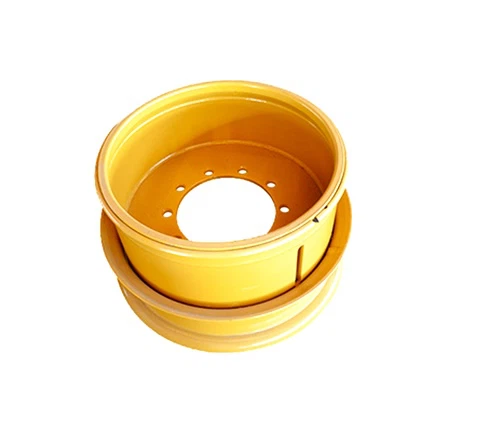
Rolling Resistance of 6.5 - 15 Forklift Wheels
As a supplier of 6.5 - 15 forklift wheels, we understand the importance of providing wheels with optimal rolling resistance. Our 6.5 - 15 forklift wheels are designed to balance the various factors that affect rolling resistance to ensure the best performance for our customers.
We offer a range of wheel materials, including solid rubber and pneumatic options. Solid rubber wheels are ideal for applications where durability and puncture resistance are required, while pneumatic wheels are better suited for outdoor or rough - terrain applications due to their lower rolling resistance and better shock absorption.
In addition to material selection, we also pay close attention to the design and construction of our wheels. Our wheels are engineered to have the right amount of flexibility and hardness to minimize rolling resistance while maintaining the necessary strength and stability to carry heavy loads.
Comparison with Other Forklift Wheels
To better understand the rolling resistance of 6.5 - 15 forklift wheels, it can be helpful to compare them with other types of forklift wheels. For example, the 9.75 - 15 Forklift Wheel may have different rolling resistance characteristics due to its larger size and potentially different load - carrying capacity. Similarly, the 7.0T - 15 Forklift Wheel may be designed for different applications and have a different balance of factors affecting rolling resistance.
Another interesting comparison can be made with specialized wheels such as the Otr33 - 13.00/2.5ttlwheel Rim for Port Machinery. These wheels are designed for heavy - duty port machinery and may have unique rolling resistance properties due to the extreme loads and harsh operating conditions they are exposed to.
Importance for Our Customers
For our customers, understanding the rolling resistance of 6.5 - 15 forklift wheels is crucial for making informed decisions about their forklift operations. By choosing wheels with lower rolling resistance, they can improve energy efficiency, reduce maintenance costs, and increase productivity.
We work closely with our customers to understand their specific needs and recommend the most suitable wheels for their applications. Whether they are operating in a warehouse, a manufacturing plant, or an outdoor yard, we have the expertise and product range to provide them with the best solutions.
Conclusion
In conclusion, rolling resistance is a critical factor in the performance of 6.5 - 15 forklift wheels. By understanding the factors that affect rolling resistance and its impact on forklift operation, we can provide our customers with high - quality wheels that offer optimal performance.
If you are interested in learning more about our 6.5 - 15 forklift wheels or have any questions about rolling resistance, please do not hesitate to contact us. We are always ready to assist you in finding the best wheels for your forklift needs and look forward to the opportunity to discuss potential procurement and collaboration.
References
- "Forklift Operator's Manual" - General industry guidelines on forklift operation and wheel performance.
- "Tire and Wheel Technology Handbook" - Technical information on the design and performance of wheels and tires.
- Industry research papers on the topic of rolling resistance in industrial vehicles.
Send Inquiry