

What are the disadvantages of solid agricultural wheels?
Sep 09, 2025
Leave a message
Hey there! I'm in the agricultural wheels supply business, and while I'm all about selling these wheels, it's important to be honest about their drawbacks. So, let's dig into the disadvantages of solid agricultural wheels.
1. High Initial Cost
One of the biggest downsides of solid agricultural wheels is the high upfront investment. These wheels are made from durable materials to withstand the tough conditions in the fields. For instance, they're often constructed with thick rubber compounds or strong metals. This high - quality construction means that the cost of manufacturing is relatively high, and that cost gets passed on to the customer.
When you're looking at different models like the W8*24 Tractor Wheel, W10*28 Tractor Wheel, or W9*24 Tractor Wheel, you'll notice that the price tag is steeper compared to other types of wheels. For small - scale farmers or those on a tight budget, this can be a real deal - breaker. It might force them to look for more affordable alternatives, even if the solid wheels offer better long - term performance in some aspects.
2. Limited Shock Absorption
Solid agricultural wheels lack the natural shock - absorbing properties that pneumatic (air - filled) wheels have. When a tractor or other agricultural machinery equipped with solid wheels moves over rough terrain, bumps, and uneven surfaces, the vibrations are directly transferred to the vehicle and its operator.
This can be extremely uncomfortable for the person driving the machinery. Over time, the constant jolting can lead to fatigue and even long - term health issues like back problems. Moreover, the lack of shock absorption can also cause damage to the machinery itself. Components inside the tractor, such as the engine, transmission, and other delicate parts, are more likely to experience wear and tear due to the increased stress from the vibrations.
3. Heavy Weight
Solid wheels are generally heavier than their pneumatic counterparts. This extra weight can put a strain on the agricultural machinery. For example, a tractor with solid wheels has to work harder to move forward, which means it consumes more fuel. Higher fuel consumption translates to increased operating costs for the farmer.
The added weight also has an impact on the soil. When heavy solid wheels roll over the ground, they can cause soil compaction. Soil compaction reduces the porosity of the soil, making it harder for water to penetrate and for plant roots to grow. This can ultimately lead to reduced crop yields. In areas with already poor soil quality, the problem of soil compaction caused by solid wheels can be even more severe.
4. Lack of Traction in Certain Conditions
While solid wheels can provide good traction in some situations, they may not perform as well in others. In wet or muddy conditions, the solid design doesn't allow for the same level of grip as pneumatic wheels. Pneumatic wheels can deform slightly on soft ground, increasing the contact area with the soil and providing better traction.
Solid wheels, on the other hand, tend to slip more easily in wet or muddy fields. This can make it difficult for the agricultural machinery to move forward efficiently, and it may even get stuck. Farmers may have to spend extra time and effort to get the machinery out of a sticky situation, which can slow down the entire farming operation.
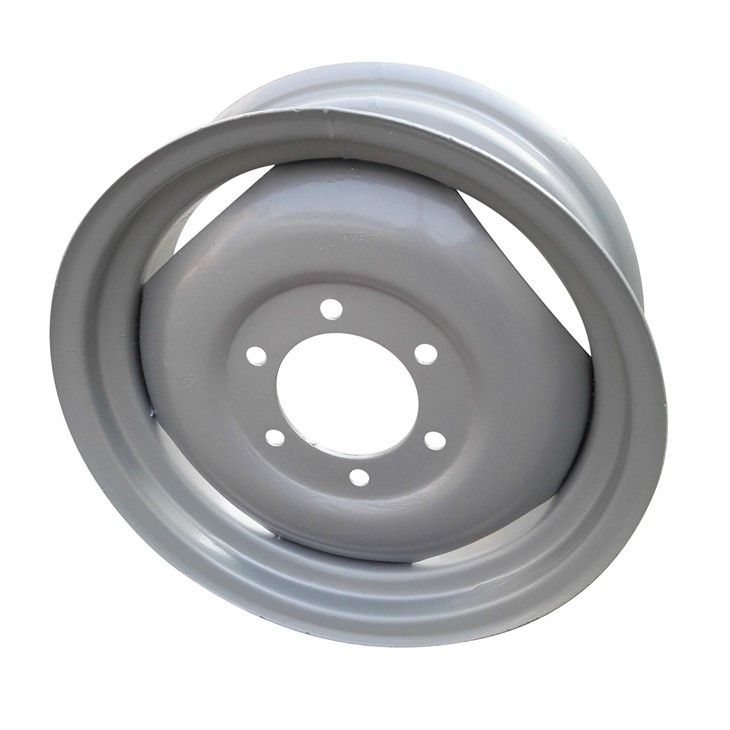

5. Difficulty in Replacement and Repair
When a solid agricultural wheel gets damaged, it can be a hassle to replace or repair. Unlike pneumatic wheels, which can often be quickly fixed by patching a puncture or replacing a tube, solid wheels usually require more complex procedures.
If there's a crack or significant damage to a solid wheel, it may need to be completely replaced. This not only means a higher cost but also a longer downtime for the machinery. During the time when the wheel is being replaced, the farmer can't use the equipment, which can disrupt the farming schedule, especially during peak seasons like planting or harvesting.
6. Reduced Maneuverability
Solid wheels can limit the maneuverability of agricultural machinery. Their rigid structure makes it harder for the vehicle to make sharp turns or navigate tight spaces. In a large - scale farm, this may not be a huge problem, but for smaller farms or orchards with narrow rows of crops, it can be a real issue.
Farmers need to be able to move their machinery precisely to perform tasks like spraying pesticides or harvesting crops. With solid wheels, it becomes more challenging to achieve the level of precision required, which can lead to inefficiencies and potentially damage to the crops.
7. Environmental Impact
The production of solid agricultural wheels often involves the use of non - renewable resources and energy - intensive manufacturing processes. The materials used, such as certain types of rubber or metals, are extracted from the earth, and the manufacturing process releases greenhouse gases and other pollutants into the environment.
Moreover, when solid wheels reach the end of their lifespan, they can be difficult to recycle. This contributes to the growing problem of waste management in the agricultural sector. As more and more farmers are becoming environmentally conscious, the environmental impact of solid wheels is becoming a significant concern.
Despite these disadvantages, solid agricultural wheels still have their place in the market. They offer durability and long - term performance in certain conditions. If you're considering purchasing agricultural wheels and want to discuss which type is best for your specific needs, I'd love to have a chat. Whether it's the W8*24 Tractor Wheel, W10*28 Tractor Wheel, or W9*24 Tractor Wheel, I can provide you with more detailed information and help you make an informed decision. So, don't hesitate to reach out and let's talk about your agricultural wheel requirements.
References
- "Agricultural Machinery and Equipment Handbook"
- "Soil Science and Crop Production"
- Industry reports on agricultural wheel manufacturing and usage.
Send Inquiry