

How do small wheel rims affect the stability of a car at high speeds?
Jul 18, 2025
Leave a message
Hey there, car enthusiasts! I'm a supplier of small wheel rims, and today I wanna chat about how small wheel rims can affect a car's stability at high speeds. It's a topic that's super important, whether you're a casual driver or a speed junkie.
First off, let's talk about what we mean by "small wheel rims." Generally, when we say small, we're looking at rims with diameters in the range of 13 - 16 inches. These are commonly found on economy cars, some compact models, and older vehicles. In contrast, larger wheel rims can go up to 20 inches or more, which are often seen on high - performance and luxury cars.
One of the key factors that affects a car's stability at high speeds is the tire sidewall height. Small wheel rims usually come with taller sidewalls. The sidewall is the part of the tire between the rim and the tread. When you've got a taller sidewall, it can act like a cushion. It absorbs more of the bumps and irregularities on the road. At high speeds, this can be both a blessing and a curse.
On the plus side, the taller sidewall can provide a smoother ride. It reduces the harshness of impacts from potholes or rough patches, which means less jarring for you and your passengers. This can also help keep the tires in better contact with the road surface. When the tire can maintain good contact, it improves traction. Traction is crucial for stability because it allows the car to grip the road when you're going fast, making it easier to steer and brake.
However, there are also some downsides. Taller sidewalls are more flexible. At high speeds, this flexibility can lead to something called "sidewall flex." When the sidewall flexes too much, it can cause the tire to deform. This deformation can change the tire's contact patch with the road. The contact patch is the area of the tire that actually touches the road. If the contact patch changes shape or size, it can affect the car's handling. You might notice that the car feels a bit "loose" or less responsive when you're trying to make turns at high speeds.
Another aspect to consider is the rotational inertia. Smaller wheel rims and their associated tires have less rotational inertia compared to larger ones. Rotational inertia is the resistance of an object to changes in its rotational motion. With less rotational inertia, the wheels can speed up and slow down more quickly. This can be an advantage when it comes to acceleration and braking. The engine doesn't have to work as hard to get the smaller wheels spinning, and the brakes can stop them more easily.
But at high speeds, this can also lead to some instability. Because the wheels can change their speed so quickly, they can be more susceptible to sudden changes in road conditions. For example, if you hit a small bump or a patch of uneven road, the wheels can react more violently. This can cause the car to jerk or wobble, which is definitely not ideal for stability.
Now, let's talk about some real - world implications. If you're driving a car with small wheel rims at high speeds on a straight, smooth highway, you might not notice many issues. The smooth road surface minimizes the effects of sidewall flex, and the car can maintain a relatively stable trajectory. But when you start taking corners or encounter rough roads, that's when things can get a bit dicey.
For example, if you're going around a sharp curve at high speed, the sidewall flex can cause the car to lean more than it would with larger, stiffer wheels. This increased lean can make the car feel less planted, and you might have to be extra careful with your steering inputs to keep the car on track.
On the other hand, if you're in a situation where you need to make an emergency stop at high speed, the lower rotational inertia of the small wheel rims can work in your favor. The brakes can bring the wheels to a stop more quickly, potentially reducing your stopping distance.
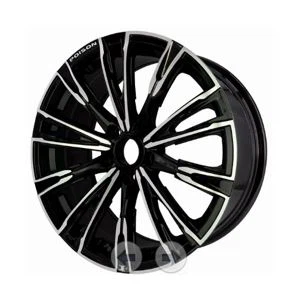
If you're in the market for small wheel rims, we've got some great options. Check out our 15inch Rims for Cars. These are perfect for those looking for a balance between affordability and performance. We also have 5 Hole Alloy Car Wheel, which offer a great combination of strength and style. And for those who like a bit of off - road action, our 19*8.5 Forged Offroad Alloy Wheels are built to withstand the toughest conditions.
In conclusion, small wheel rims have both advantages and disadvantages when it comes to a car's stability at high speeds. While they can offer a smoother ride and better acceleration and braking in some situations, they can also lead to issues with sidewall flex and increased sensitivity to road conditions.
If you're interested in learning more about our small wheel rims or want to start a conversation about a potential purchase, don't hesitate to reach out. We're here to help you find the perfect wheels for your car and your driving needs.
References

- "The Physics of Vehicle Dynamics" by Thomas D. Gillespie
- "Tire and Vehicle Dynamics" by Hans Pacejka
Send Inquiry