

How do I know if 15 - inch rims are compatible with my car's original equipment?
Oct 29, 2025
Leave a message
Determining whether 15 - inch rims are compatible with your car's original equipment is a crucial step before making any changes to your vehicle. As a supplier of 15 - inch rims for cars, I understand the importance of getting this right. In this blog, I'll guide you through the key factors to consider when assessing compatibility.
1. Bolt Pattern
The bolt pattern is one of the most fundamental aspects of rim compatibility. It refers to the number of bolts on the wheel hub and the diameter of the circle formed by the center of these bolts. For example, a common bolt pattern might be 4x100, which means there are 4 bolts, and the diameter of the circle they form is 100 millimeters.
To find out your car's original bolt pattern, you can refer to your vehicle's owner's manual. If you don't have the manual, you can also check the information on the inside of the driver's door jamb or measure it yourself. Measuring the bolt pattern requires a bit of precision. For a 4 - bolt pattern, measure the distance between the centers of two bolts that are directly across from each other. For a 5 - bolt pattern, it's a bit more complicated, and you may need a bolt pattern gauge.
If the bolt pattern of the 15 - inch rims you're considering doesn't match your car's original bolt pattern, the rims simply won't fit onto your vehicle. You can find a wide range of 5 Hole Alloy Car Wheel on our website, which come in various bolt patterns to suit different vehicles.
2. Offset
Offset is another critical factor. It is the distance between the wheel's mounting surface and the centerline of the wheel. A positive offset means the mounting surface is closer to the outside of the wheel, while a negative offset means it's closer to the inside.
The offset affects how the wheel sits within the wheel well. If the offset is too far off from your car's original offset, it can cause a variety of problems. For instance, a wheel with a large positive offset may sit too far inside the wheel well, which can lead to clearance issues with the suspension components. On the other hand, a wheel with a large negative offset may stick out too far, potentially rubbing against the fenders.
To determine your car's original offset, you can again consult the owner's manual or measure the existing wheels. When choosing 15 - inch rims, make sure the offset is within an acceptable range for your vehicle. Our 15 - inch rims are carefully designed with appropriate offsets to ensure a proper fit for different car models.
3. Center Bore
The center bore is the hole in the center of the wheel that fits over the hub of the vehicle. It's important that the center bore of the rim matches the hub diameter of your car. If the center bore is too small, the rim won't fit over the hub. If it's too large, the wheel may not be centered properly, which can cause vibrations while driving.
You can measure the center bore of your car's original wheels using a caliper. When selecting 15 - inch rims, ensure that the center bore dimensions are compatible with your vehicle. This ensures a smooth and safe driving experience.
4. Tire Size
While we're focusing on the rims here, the tire size is also closely related to rim compatibility. The tire size is usually expressed in a format like P205/55R15. The number 15 at the end indicates the rim diameter.
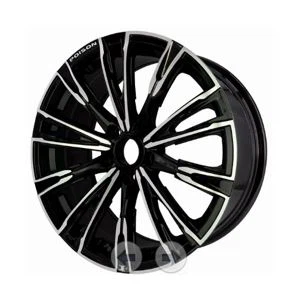

You need to make sure that the tires you plan to use with the 15 - inch rims are appropriate for your vehicle. Using the wrong tire size can affect the speedometer accuracy, handling, and overall safety of your car. If you're used to a certain tire size on your original wheels, you may need to consult a tire professional to determine if the same or a compatible tire size can be used with the 15 - inch rims. We also offer guidance on choosing the right tires for our 15 - inch rims to ensure a perfect match.
5. Suspension and Brake Clearance
The size and design of your car's suspension and brake components can also impact rim compatibility. Larger rims may require more clearance to avoid rubbing against the suspension or brake calipers.
Before purchasing 15 - inch rims, take a close look at your car's suspension and brakes. If you have upgraded brakes with larger calipers, you need to make sure the 15 - inch rims have enough clearance for these components. In some cases, you may need to choose rims with a specific design or depth to accommodate the larger brakes.
6. Load Rating
The load rating of a rim indicates the maximum weight it can safely support. It's essential to choose 15 - inch rims with a load rating that meets or exceeds the requirements of your vehicle. The load rating is usually stamped on the rim.
Your car's original rims have a load rating that is suitable for the vehicle's weight and intended use. If you choose rims with a lower load rating, it can be a safety hazard, especially if you frequently carry heavy loads or drive with a full passenger capacity. Make sure to check the load rating carefully when selecting 15 - inch rims for your car.
7. Aesthetic and Performance Considerations
Beyond the technical compatibility, you may also want to consider the aesthetic and performance aspects. 15 - inch rims can give your car a different look compared to the original wheels. They can make your car look more sporty or classic, depending on the design.
In terms of performance, smaller rims like 15 - inch ones may offer better acceleration and braking in some cases because they have less rotational mass. However, they may also have a slightly rougher ride compared to larger rims with lower - profile tires. You need to balance your aesthetic preferences with the performance characteristics you desire.
If you're looking for a wider range of rim options, we also offer 18~22 Custom 2 - pc Sport Car Wheel Rims that can provide a more aggressive and high - performance look for your car.
Conclusion
Determining the compatibility of 15 - inch rims with your car's original equipment involves considering multiple factors, including bolt pattern, offset, center bore, tire size, suspension and brake clearance, load rating, and aesthetic and performance preferences. As a supplier of 15 - inch rims for cars, we have a wide selection of rims that are carefully designed to meet the compatibility requirements of different vehicles.
If you're unsure about whether 15 - inch rims are suitable for your car, our team of experts is here to help. We can provide detailed information and guidance to ensure that you make the right choice. Whether you're looking to enhance the appearance of your car or improve its performance, our 15 - inch rims are a great option.
If you're interested in purchasing our 15 - inch rims or have any questions about compatibility, feel free to reach out to us. We're ready to assist you with your rim selection and guide you through the purchasing process. Let's work together to give your car a new and improved look!
References
- "The Complete Guide to Wheel Fitment." Tire Rack.
- "How to Measure Bolt Patterns." Car Talk.
- "Understanding Wheel Offset." Discount Tire.
Send Inquiry