

Can I use agricultural wheels on a fertilizer spreader?
Oct 01, 2025
Leave a message
Hey there! As an agricultural wheels supplier, I often get asked a bunch of questions from farmers and folks in the ag industry. One question that pops up quite a bit is, "Can I use agricultural wheels on a fertilizer spreader?" Well, let's dig into this topic and find out.
First off, let's understand what agricultural wheels are all about. Agricultural wheels are designed to handle the tough conditions of farmland. They're built to provide good traction on uneven and soft ground, which is typical in agricultural settings. These wheels come in various sizes and designs to suit different types of farm equipment. For example, we have the W8*24 Tractor Wheel, the W11*28 Tractor Wheel, and the DW28*30 Tractor Wheel. Each of these wheels has its own unique features and is suitable for different applications.
Now, let's talk about fertilizer spreaders. A fertilizer spreader is a crucial piece of equipment on the farm. Its main job is to evenly distribute fertilizers across the fields. There are different types of fertilizer spreaders, like broadcast spreaders and drop spreaders. The type of spreader you have can influence whether agricultural wheels are a good fit.
One of the key factors to consider when thinking about using agricultural wheels on a fertilizer spreader is the load capacity. Fertilizer spreaders can be quite heavy, especially when they're filled with fertilizer. Agricultural wheels are generally designed to handle heavy loads, which is a plus. But you need to make sure that the specific agricultural wheels you're considering can support the weight of your fertilizer spreader, both when it's empty and when it's full.
Traction is another important aspect. In the field, a fertilizer spreader needs to move smoothly and evenly to ensure proper distribution of the fertilizer. Agricultural wheels are known for their excellent traction on various terrains, such as mud, grass, and dirt. This traction can help the fertilizer spreader move without getting stuck, which is crucial for efficient operation. For example, if you're working on a wet field, the deep treads on agricultural wheels can grip the ground better, preventing slippage and ensuring that the spreader moves in a straight line.

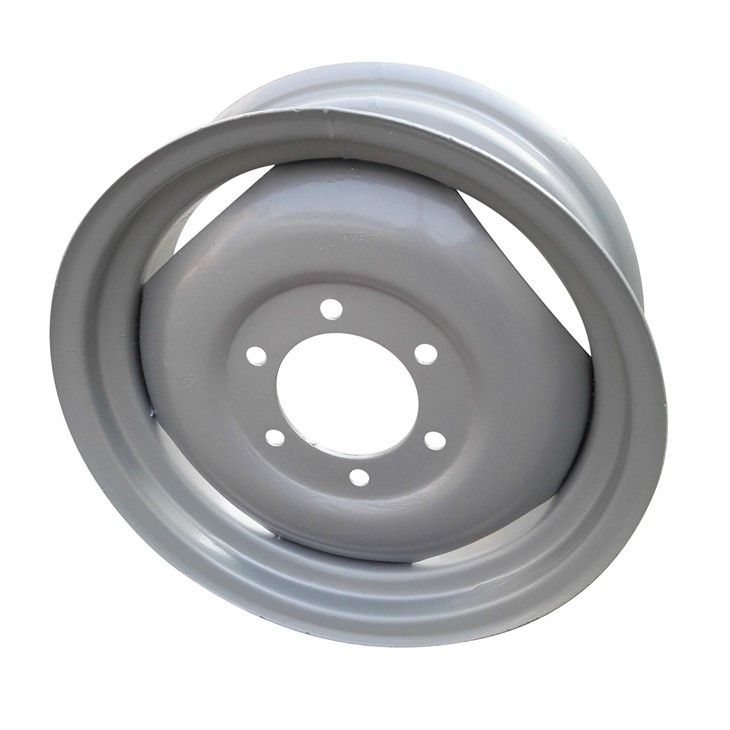
However, there are also some potential drawbacks to using agricultural wheels on a fertilizer spreader. One issue is the width of the wheels. Some agricultural wheels are quite wide, which might cause problems in narrow rows or tight spaces. If your fields have narrow rows, the wide wheels could damage the crops on the sides. Also, the large size of some agricultural wheels might make the fertilizer spreader more difficult to maneuver in small areas.
Another thing to think about is the cost. Agricultural wheels can be more expensive than the standard wheels that come with some fertilizer spreaders. You need to weigh the benefits of using agricultural wheels against the additional cost. If you're using the fertilizer spreader on rough or challenging terrain regularly, the investment in agricultural wheels might be worth it. But if you mainly work on flat and well - maintained fields, the standard wheels might be sufficient.
Let's take a closer look at the different types of agricultural wheels and how they might work with a fertilizer spreader. The W8*24 Tractor Wheel is a medium - sized wheel that offers a good balance between traction and maneuverability. It's suitable for smaller fertilizer spreaders or for use in fields with relatively even terrain. The tread pattern on this wheel provides decent grip, and its size allows for easy movement in most areas.
The W11*28 Tractor Wheel is a larger wheel. It has a higher load - carrying capacity and better traction on soft or muddy ground. If you have a large fertilizer spreader or work on challenging terrains, this wheel could be a great choice. However, as mentioned earlier, its larger size might make it less suitable for narrow rows.
The DW28*30 Tractor Wheel is a heavy - duty wheel designed for the toughest agricultural conditions. It can handle extremely heavy loads and provides excellent traction on rough ground. But again, its size and width need to be carefully considered, especially if you have specific field conditions.
In addition to the physical characteristics of the wheels, you also need to think about the compatibility with your fertilizer spreader. Make sure that the mounting system of the agricultural wheels is compatible with the spreader. Some spreaders might require specific types of wheel hubs or axles, so it's important to check these details before making a purchase.
If you're still not sure whether agricultural wheels are right for your fertilizer spreader, I'd recommend doing a test. You can rent or borrow a set of agricultural wheels and try them out on your spreader in a small area of your field. This will give you a real - world idea of how they perform and whether they're a good fit for your needs.
In conclusion, using agricultural wheels on a fertilizer spreader can have both advantages and disadvantages. The excellent traction and load - carrying capacity of agricultural wheels can be beneficial, especially in challenging field conditions. However, factors such as wheel width, cost, and maneuverability need to be carefully considered. If you're looking for high - quality agricultural wheels for your fertilizer spreader or any other farm equipment, I'm here to help. Whether you need advice on which wheel is best for your situation or you're ready to make a purchase, feel free to reach out. We can discuss your specific needs and find the perfect solution for your farm.
References
- General knowledge of agricultural equipment and wheels from years of experience in the industry.
- Agricultural machinery manuals and specifications.
Send Inquiry