


22.5*8.25 Aluminum Truck Wheel
Shandong Santeck Wheels Co.,Ltd is a research, development, manufacturing and sales company located in Guangrao County Economic Development Zone, Shandong Province.The company has 46 technicians and 1017 employees. It mainly produces steel rings and magnesium-aluminum alloy wheels of various models. The products are obtained from Smithers Papra, USA. DOT, Germany TUV, India ARA, Indonesia SIN, Brazil INMETRO, South Africa SABS, Japan VIA and other certifications.
Why Choose Us
Quality Control
In the processing of production, our professional technical engineers inspect the processing to ensure the quality of products,After our machine finish , our engineer will make 24 hours test constantly and ensure the machine reach to the best performance.
Customer Satisfaction
Providing after-sales services can enhance customer satisfaction by ensuring that customers' needs are met even after the purchase. This can lead to increased customer loyalty and positive word-of-mouth referrals.
One Stop Solution
From the begining inquiry and throughout the entire process until you receive the goods. we are dedicated to supporting you every step of the way.
Competitive Price
We have professional sourcing team and cost accounting team, stive to reduce cost and profit and provide you a good price.

Steel Without Inner Tube 6jx16
Our company now offers a wide range of wheels for trucks, trailers, and buses. Sizes of 16" to 24" are available for tube-type, and 6Jx16 for tubeless applications.

6.0-16 steel Tube wheel is suitable for light truck wheels, and can also be used for construction machinery vehicle wheels.

Tube truck wheels are mainly used in truck series, heavy trucks and trailers

Santeck exploring in wheel area for more than 20 years, has invested many wheel production lines to meet customers' needs and provides the premium quality truck bus radial wheels, aluminum & steel wheels.


Overview : Tubeless truck wheels are mainly used in truck series, heavy trucks and trailers, medium-sized vehicles, city buses and long-distance buses

22.5*8.25 Aluminum Truck Wheel
Our truck aluminum wheels are designed to provide exceptional performance and durability. Made from high-quality aluminum alloy, these wheels offer a lightweight construction without compromising strength or safety.

The rims off Steel are mainly used in truck series, heavy trucks and trailers, medium-sized vehicles, city buses and long-distance buses
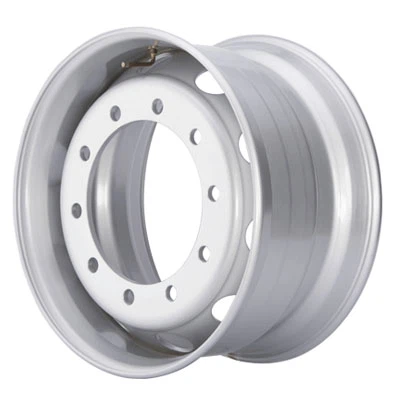
22.5*11.75tubeless Steel Truck Wheel
Our company now offers a wide range of wheels for trucks, trailers, and buses. Sizes of 16" to 24" are available for tube-type, and 17.5" to 24.5" for tubeless applications.
What is 22.5*8.25 Aluminum Truck Wheel
A wheel is a rotating component (typically circular in shape) that is intended to turn on an axle bearing. The wheel is one of the key components of the wheel and axle which is one of the six simple machines.
Rear Wheels Carry The Weight
The rear wheels carry most of the truck's weight. The rear wheels are known to be single bearing hubs, unlike the front wheel that is mounted on double bearing hubs. One should also know that rear wheels usually have four wheels with two of them attached to one axle.
The pair of wheels needs to be supported on the same hub.the rims are made to overlap one another in order to accommodate the wheels on the same hub. Now this explains the reason behind truck rear wheels being concave.
The Front Wheels Need To Be Steered
Certain components help steering the front wheels. These components need some space to make way for the desired motions of the pickup truck. For your information, the braking disc and the drum are situated a bit outwards from the steering components, thus taking some space away from the steering axis.
In order for the steering components and brakes to be distantly placed, the wheel needs to bulge out outwards. This, in turn, explains the reason behind truck front wheels being convex.
Combining The Two Facts
On the front wheels, hub to hub width needs to maintain a sufficient distance. To facilitate the scenario, the wheels are mount in the convex position. In case, the front wheels are in the shape of a concave; a significant external offset is witnessed. Such a condition further results in over sensitiveness while steering.
Whereas, the two wheels on the rear side are mounted to a common mounting point while maintaining enough space between the two tires. To tackle the problem of gap between the tires, the rear wheels are concave shaped.even the weight carried by the rear wheels gets distributed equally. You could also refer to our maintenance tips for tips for avoiding truck overheating.
Maintenance Tips for Truck Wheels
Clean The Truck Wheels And Tires Routinely
Clean and shiny truck wheels aren't just for looks – they also improve the truck's safety and performance. Thoroughly rinse and wash the wheels and tires to remove dirt, grease, grime, and brake dust. While you're cleaning, also check the condition of the truck wheels to see if they're in good shape.
Use A Machine To Polish And Buff Truck Wheels Between Regular Services
A polishing machine is more effective and efficient at polishing and buffing truck wheels than doing it by hand. Polishing and buffing wheels between full wheel services will ensure your wheels maintain their shine.is a portable on-wheel polishing machine that polishes and buffs a wheel in just 10-15 minutes so.
Remove Oxidization And Restore Truck Wheel Shine
Oxidization on truck wheels should be removed to restore shine and improve wheel safety. A method for removing heavy oxidization and restoring the shine on truck wheels is to run them through an automated wheel polishing machine.
Pay Attention To The Bead Area
Cleaning and maintaining the bead area of your wheels will ensure a good seal on your tires and minimize air leaks. Damage to the bead area can cause premature tire wear or failures, so inspecting and servicing this area routinely will help extend the life of your wheels.
Take Care Of Your Tools
Not only should you maintain your truck wheels, but also the tools you use to clean, polish, and buff them. Regularly inspect your tools and order replacement parts and supplies when necessary to keep your tools in working order.
Inspect Truck Wheels Before Trips
Before every trip, inspect the truck wheels and other systems to ensure that they're ready for the road. A pre-trip routine will help you detect and address issues before heading out on the road. An effective inspection should include: Checking the tire pressure, examining tread wear, and inspecting rims for cracks and damage.
Things to Consider When Getting Custom Truck Wheel for Your Business
Types of Trucks
Before deciding between different kinds of wheels, it is important to consider the type of truck. The type of the truck influences the features needed in the truck rims. For pickup truck rims, then terrain is not that big issue but performance is important.
Heavy-duty trucks would need truck rims that can handle the load without cracking or any other failure while providing maximum performance at the same time.
Off-road trucks need durable truck rims which can tolerate harsh, rough, bumpy paths and extreme weather conditions. Street truck wheels need strength, resistance to corrosion, and fuel efficiency so the rims can be selected accordingly.
Cost and Quality
The cost of the wheel has a direct impact on affordability. The budget plays an important role. Everyone wants more features at an efficient price. Going by the budget will help in eliminating unaffordable options at the beginning which will simplify the shortlisting task as there will not be unnecessary options.
Quality is another important aspect while selecting amongst different types of rims for trucks. Considering the durability, strength, fuel efficiency and overall performance of different types of truck wheels is important before arriving at a decision.
When it comes to wheels, the difference between car and truck wheels doesn't stop at size. Load capability, handling, fitment, price and ground clearance all play an important role in the purchase of OEM and aftermarket wheels. Here are some things to consider when deciding what type of wheels are best for your car or truck.
Let us begin with the obvious difference between truck and car wheels. Truck wheels are much larger in size. Since trucks are more likely to be in heavy-duty, off-roading situations, their larger wheels help to create ground clearance for the truck's underbody. This improves approach and departure angles, allowing you to protect your mechanical components while scaling rough terrain.
Larger wheels and tires also make for better handling on dirt and gravel as well as improved breaking performance on pavement. The more rubber you have coming into contact with the ground, the more friction you can create. This also helps with towing capabilities.
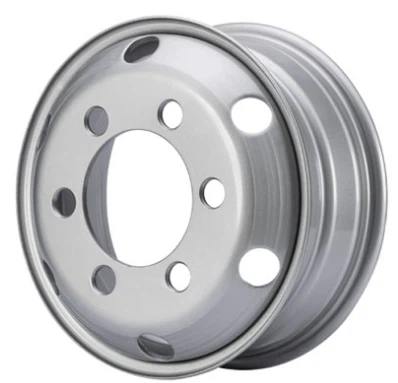
When making a distinction between truck tires and car tires, consider what the vehicle was designed to do. Many sedans, coups and crossovers are designed for personal use and use passenger tires, while larger SUV's and trucks used to carry heavy loads or trailers use Light Truck (LT) tires. The key component in deciding what tires your wheels need is load capacity. Make sure your tires can carry the weight of the vehicle and any additional cargo.
Truck wheel modifications also differ from car wheels. Some popular ground clearance methods are lift kits, portal axles and larger wheels. Aesthetically, large wheel modifications make a vehicle look lower, longer, and wider.the main objective of most truck modifications is to get the wheels to fit wide with a larger lip between the tire and wheel well.many truck owners take this practice to the extreme. This type of fitment would be considered a poke fitment on a car.
Pricing can differ greatly depending on wheel size. Both installation and replacement of truck wheels is more expensive than car wheels.
The Different Types of Pickup Truck
Steel
Steel has long been the standard for the wheels on vehicles of all types. It is stronger and heavier than aluminum. Steel wheels are typically made by using a powerful press to stamp out the parts, which are then welded to make the wheel. This method does not permit much artistic expression, such as intricate spoke designs. Buyers are pretty much limited to plain wheels, perhaps with openings to enhance brake cooling.some manufacturers have made chrome-clad steel wheels standard options on their trucks. Chrome-clad wheels have a thin, chrome-plated overlay that is affixed to the wheel's surface.
Aluminum Alloy
An alloy of nickel and aluminum is commonly used for truck wheels. The ratio of the metals determines the properties of the wheel. If the mixture contains a higher proportion of nickel, the wheel is heavier and less prone to bending, but they can be more likely to crack or be brittle. If the mixture has a lower proportion of nickel, the wheel is lighter, but it is also more prone to bending when impacting a curb, pothole or other obstruction.
Cast Aluminum Wheels
Pressure casting may be low-pressure or counter-pressure. The low-pressure method forces the molten alloy into a mold by applying air pressure, which packs the alloy more densely into the mold and makes it stronger. The counter-pressure method uses reverse air pressure by creating a vacuum to suck the alloy into the mold. It produces similar results to the low-pressure method.
Gravity casting lets gravity do the work to fill the mold with the molten alloy. This method is the simplest, but it also produces wheels with the least density. To ensure that the wheels are strong enough, manufacturers make the wheels heavier and thicker than those produced by pressure casting.
Flow Formed Wheels
Flow-formed wheels are made using a hybrid manufacturing process. It starts with an alloy formed using the low-pressure casting method. The alloy is then stretched and shaped through the use of high-pressure rollers and heat. This produces an alloy that is both dense and thin, and these wheels share many properties with forged aluminum wheels.
Forged Wheels
Forged aluminum is made by subjecting a solid chunk of alloy and then using an extreme amount of pressure and heat to crush it into the proper shape. Forged aluminum wheels are extremely strong and dense, but they are also quite light. These wheels are much stronger than those made from cast aluminum.
Putting Everything Together
Once the wheel material has been selected, the next step is to choose the design. The right wheels can make a pickup stand out from the crowd. To add even more personality, a lift kit can create an impressive look, and Houston bedliners are not only decorative, but they are also protective. Other after-market accessories, such as side mirrors, toolboxes and lights, can help truck owners create a vehicle that is individually unique.
Our Factory
Shandong Santeck Wheels. Co.,Ltd, products for domestic and foreign markets, has been sold to Europe and the United States, Russia, the Middle East, Southeast Asia, Africa and other countries and regions. The company follows the philosophy of "Building a brand with quality and winning customers with service" to create world-class quality wheels for global users.

FAQ
Hot Tags: 22.5*8.25 aluminum truck wheel, China 22.5*8.25 aluminum truck wheel manufacturers, factory, green truck wheels, chrome truck wheels, truck wheel rims, weather resistant truck wheels, truck wheel handling, tractor trailer wheels
You Might Also Like


Send Inquiry